
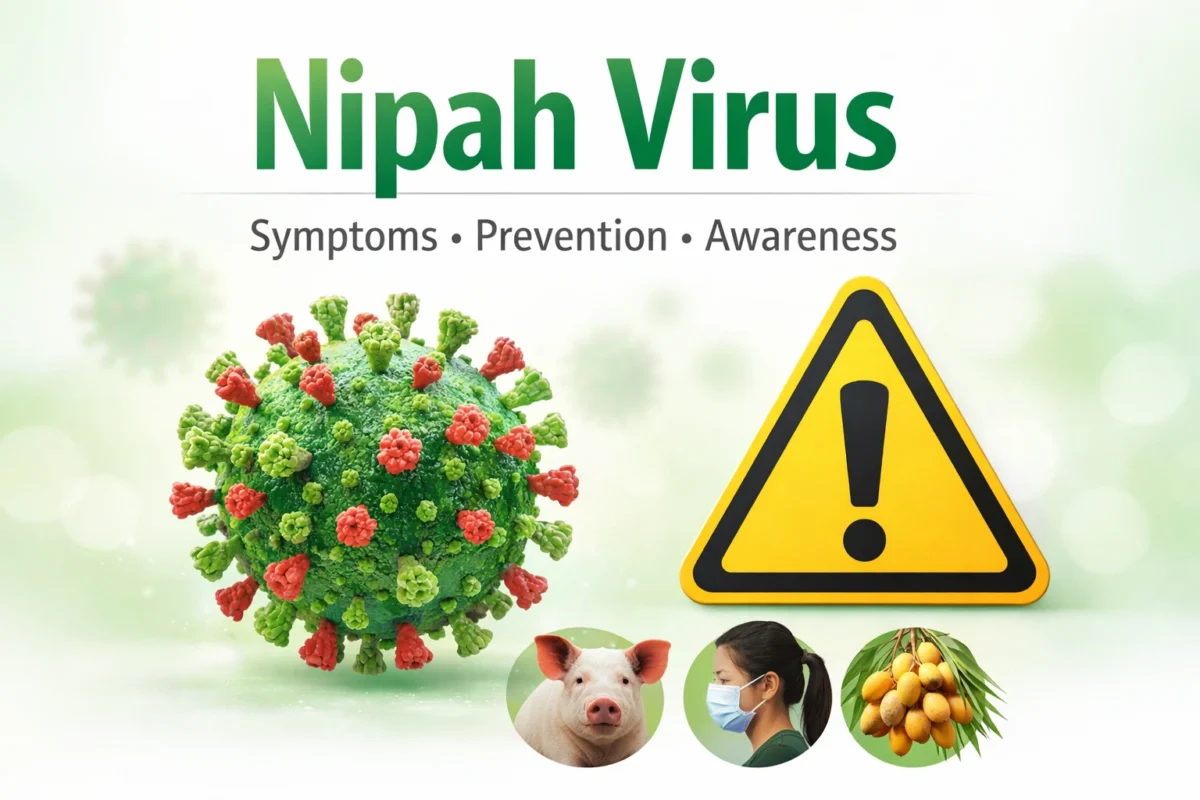
Published by HerbalHealthTips.com | Health Awareness Report
Last Updated: January 2026
The Nipah virus (NiV) is a rare but potentially fatal viral infection that has caused outbreaks in parts of South and Southeast Asia. Health authorities consider it a serious public health concern due to its high fatality rate, ability to spread between people, and the absence of a specific vaccine or antiviral treatment.
This article provides 7 critical facts about Nipah virus symptoms, transmission, and preventive measures, along with general immunity-supporting tips.
1️⃣ What Is Nipah Virus?
Nipah virus is a zoonotic virus, spreading from animals to humans. First identified in 1999 during an outbreak linked to infected pigs, its natural reservoir is fruit bats (flying foxes).
Sporadic outbreaks continue to occur, and early detection and proper healthcare are crucial for reducing fatalities.
2️⃣ How Nipah Virus Spreads
Transmission occurs via:
- Drinking raw date palm sap contaminated by fruit bats
- Direct contact with infected animals, especially pigs
- Human-to-human transmission through close contact, respiratory droplets, or bodily fluids
Healthcare workers and caregivers are higher-risk groups during outbreaks.
3️⃣ Early Symptoms of Nipah Virus
Symptoms usually appear 5–14 days after exposure and may include:
- Fever
- Headache
- Muscle pain
- Vomiting
- Sore throat
- Dizziness or confusion
4️⃣ Severe Complications
In serious cases, Nipah virus can cause:
- Brain inflammation (encephalitis)
- Seizures
- Loss of consciousness or coma
Fatality rates in outbreaks have ranged from 40% to 75%.
5️⃣ Treatment and Vaccine Status
Currently:
- ❌ No approved vaccine
- ❌ No specific antiviral treatment
Medical care focuses on supportive treatment, including ICU care, respiratory support, and management of complications. Early medical attention is essential.
6️⃣ Prevention: Public Health Tips
Health authorities recommend:
- Avoid raw or unprocessed date palm sap
- Wash fruits thoroughly and peel them before eating
- Avoid contact with sick animals
- Maintain good hand hygiene
- Follow safety protocols in healthcare and home-care settings
Early awareness and reporting of symptoms can prevent outbreaks.
7️⃣ Lifestyle and General Immunity Support (Not a Treatment)
Maintaining overall health may help the body’s natural defenses. Safe practices include:
- Balanced diet and hydration
- Adequate sleep
- Stress management
- Regular consumption of herbs like turmeric, ginger, tulsi (as part of diet only)
⚠️ These practices do not prevent or treat Nipah virus and must not replace medical care or public health guidance.
While herbs cannot cure Nipah virus, maintaining a strong immune system is essential for overall health.
- Tulsi (Holy Basil): Traditionally supports respiratory health
- Turmeric: Known for anti-inflammatory properties
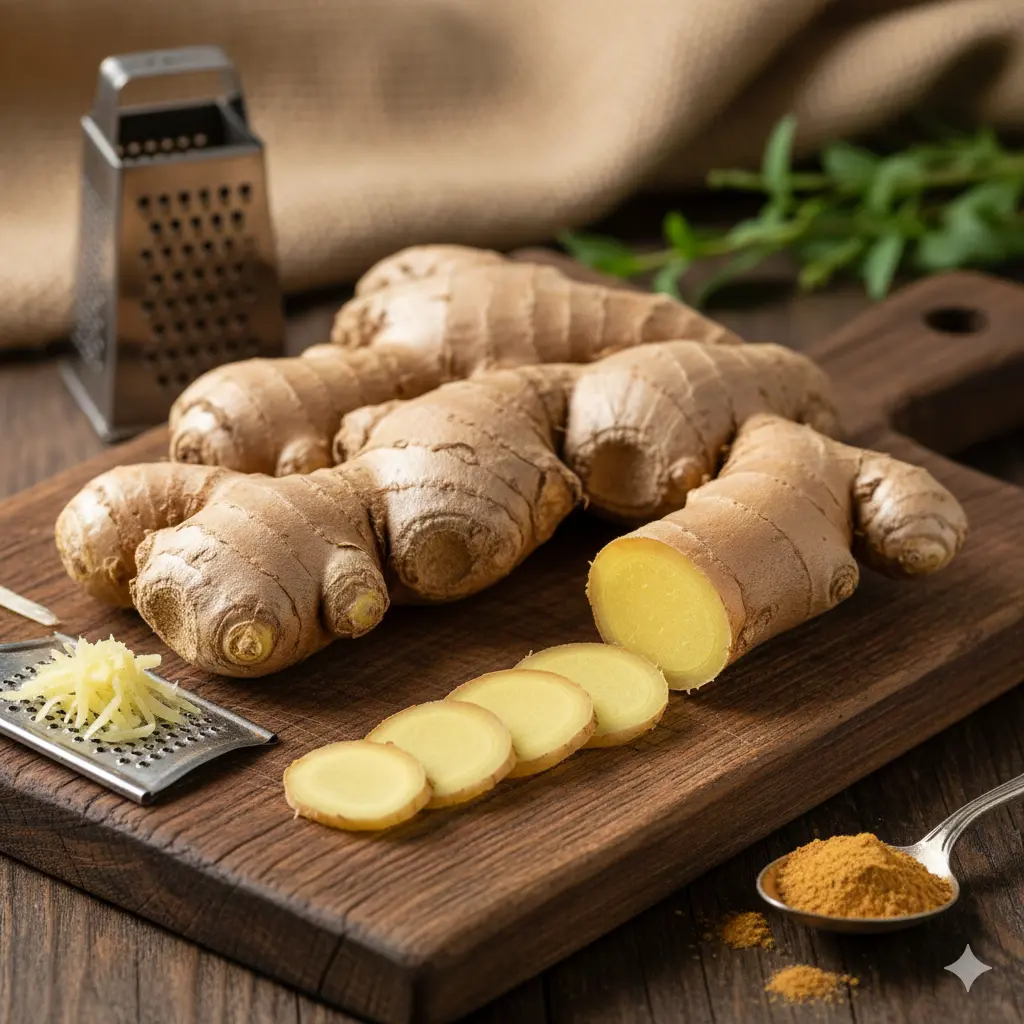
- Ginger: Supports digestion and immune response
- Amla(Indian Gooseberry): Rich in Vitamin C
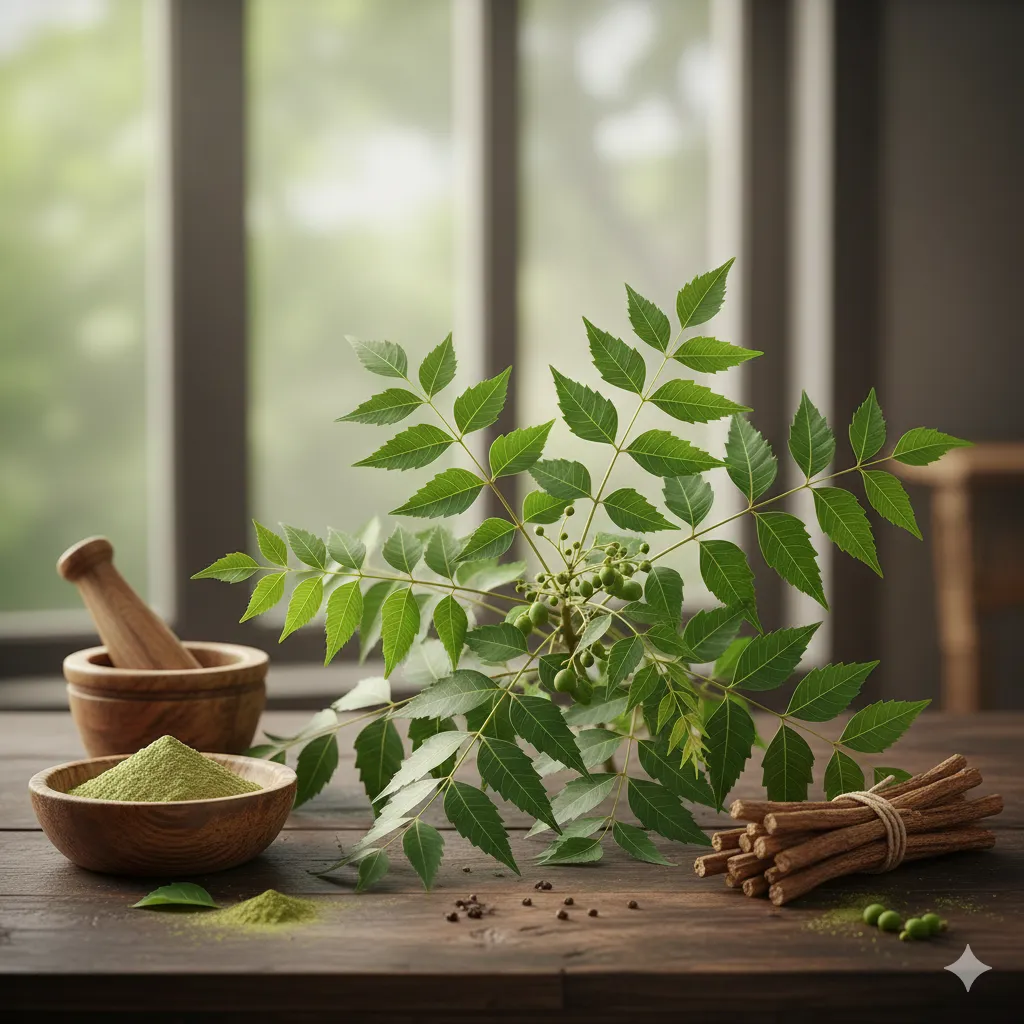
- Neem: Traditionally used for immune balance
📝 Always consult a healthcare professional before using herbal remedies, especially during infections.
Medical Disclaimer
The information provided on HerbalHealthTips.com is for educational purposes only and is not intended as medical advice. Nipah virus is a serious medical condition. Always consult a qualified healthcare professional for diagnosis, treatment, or medical guidance. Herbal and lifestyle practices mentioned are for general wellness support only.
Sources
- World Health Organization (WHO) – Nipah Virus Fact Sheet
- Centers for Disease Control and Prevention (CDC)
✍️ About the Publisher
HerbalHealthTips.com publishes evidence-based health awareness content focused on prevention, wellness education, and public health information. Articles are reviewed and updated as new guidance becomes available.
FAQ
❓ What is the Nipah (NIV) virus?
Nipah virus is a rare zoonotic virus that spreads from animals to humans and can cause severe brain infection and respiratory illness.
❓ How does Nipah (NIV) virus spread?
It spreads through contaminated food (such as raw date palm sap), infected animals like pigs, and close contact with infected people.
❓ What are the early symptoms of Nipah (NIV) virus?
Early symptoms include fever, headache, muscle pain, vomiting, sore throat, and dizziness.
❓ Is there a cure or vaccine for Nipah virus?
Currently, there is no approved vaccine or specific antiviral treatment for Nipah virus. Medical care focuses on supportive treatment.
❓ Can herbal remedies cure Nipah virus?
No. Herbal remedies cannot cure Nipah virus. However, certain herbs may support immunity and overall health when used responsibly.
❓ How can Nipah virus be prevented?
Avoid raw date palm sap, wash fruits thoroughly, avoid sick animals, maintain hygiene, and follow health authority guidelines.