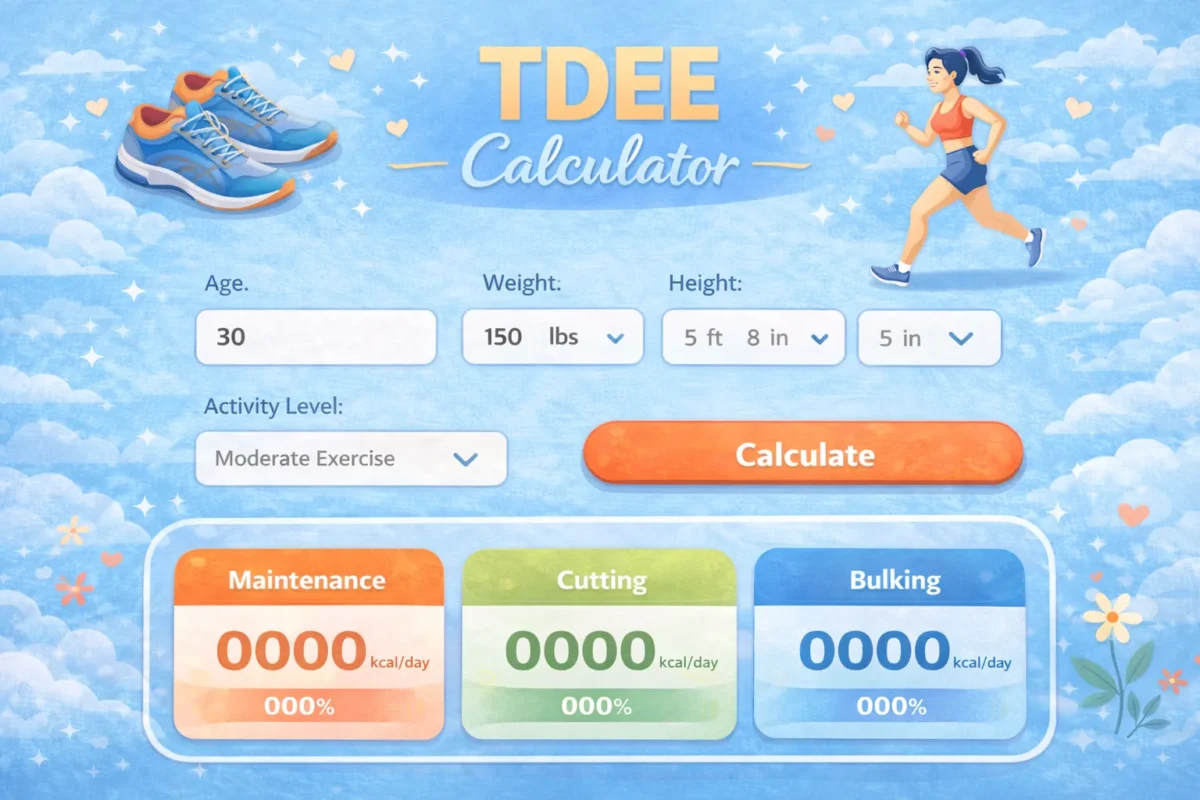
Advanced TDEE Calculator 2026
Beyond basic metabolism: Calculate your Total Daily Energy Expenditure with NEAT, adaptive thermogenesis, and modern metabolic science
Calculate Your TDEE
Total Daily Energy Expenditure (TDEE) is the total calories you burn daily, including BMR, NEAT, exercise, and digestion.
Modern TDEE Science (2026)
BMR
Basal Metabolic Rate – calories burned at complete rest for vital functions.
NEAT
Non-Exercise Activity Thermogenesis – calories from fidgeting, posture, daily movement.
Exercise
Intentional physical activity like gym workouts, sports, or running.
TEF
Thermic Effect of Food – calories burned digesting and processing nutrients.
Metabolic Adaptation: The 2026 Understanding
Modern research shows your metabolism adapts to dieting through:
Why This Calculator Is Different
Traditional TDEE calculators miss key metabolic factors that this tool includes:
- NEAT Variability: Accounts for individual movement patterns beyond exercise
- Metabolic Adaptation: Adjusts for dieting history and metabolic slowdown
- Body Composition: Option to use body fat % for more accurate BMR
- Dynamic Goals: Provides strategies for recomposition vs. traditional bulking/cutting
Debunking TDEE & Metabolism Myths
- Myth: Metabolism is fixed. Truth: NEAT can vary TDEE by 2,000+ calories daily between individuals.
- Myth: Cardio is the best way to burn calories. Truth: NEAT often contributes more to TDEE than formal exercise.
- Myth: Your metabolism slows drastically with age. Truth: Muscle loss (sarcopenia) is the primary cause, not aging itself.
- Myth: “Starvation mode” happens quickly. Truth: Significant metabolic adaptation requires sustained calorie restriction.
Increasing Your TDEE: 2026 Strategies
TDEE Components & Variability
Why Your TDEE Changes Daily
Your Total Daily Energy Expenditure isn’t fixed—it fluctuates based on numerous factors:
- Sleep: Poor sleep reduces NEAT by 10-15% the next day
- Hormonal cycles: Women’s TDEE varies by up to 300 calories across menstrual cycle
- Stress: Chronic stress can increase or decrease TDEE depending on individual response
- Diet composition: High-protein diets increase TEF by 3-5% vs. high-carb diets
- Adaptive thermogenesis: After weight loss, TDEE decreases beyond predicted amounts
Practical Application: Using Your TDEE
Weight Loss
Create a 15-25% deficit from TDEE. Larger deficits risk greater metabolic adaptation.
Muscle Gain
10-15% surplus minimizes fat gain while supporting muscle protein synthesis.
Recomposition
Maintain calories while prioritizing protein (2-2.5g/kg) and resistance training.
Reverse Dieting
After dieting, increase calories by 5-10% weekly to rebuild metabolism.
Important Disclaimer
This advanced TDEE calculator uses multiple equations and adjustment factors based on 2026 metabolic research. Individual results will vary based on genetics, medical conditions, medications, and measurement accuracy. This tool provides estimates for educational purposes—consult with a registered dietitian or healthcare provider for personalized medical advice, especially if you have metabolic conditions or eating disorders.
Frequently Asked Questions (FAQ)
Q: Which formula is most accurate?
A: Most modern calculators, including ours, use the Mifflin-St Jeor Equation. According to the American Council on Exercise (ACE), this is currently the gold standard for healthy adults. If you know your body fat percentage, the Katch-McArdle formula may provide even greater precision.
Q: Why is my TDEE lower than someone with the same weight?
A: Muscle mass is the biggest differentiator. Muscle is more metabolically active than fat. Research from the National Institutes of Health (NIH) indicates that increasing lean body mass significantly raises your BMR, thereby increasing your total daily burn even when you are not moving.
Q: How do I use TDEE for weight loss?
A: Once you know your maintenance calories (TDEE), subtract 15% to 20% for a sustainable calorie deficit. The CDC recommends a slow, steady loss of 1–2 pounds per week to ensure you are losing fat, not muscle.
Q: How often should I recalculate my TDEE?
A: You should recalculate every 10 pounds (5kg) of weight change. As you lose weight, your body requires less energy to move and maintain itself, a process known as metabolic adaptation. Clinical guidelines from Mayo Clinic suggest regular updates to avoid hitting a weight-loss plateau