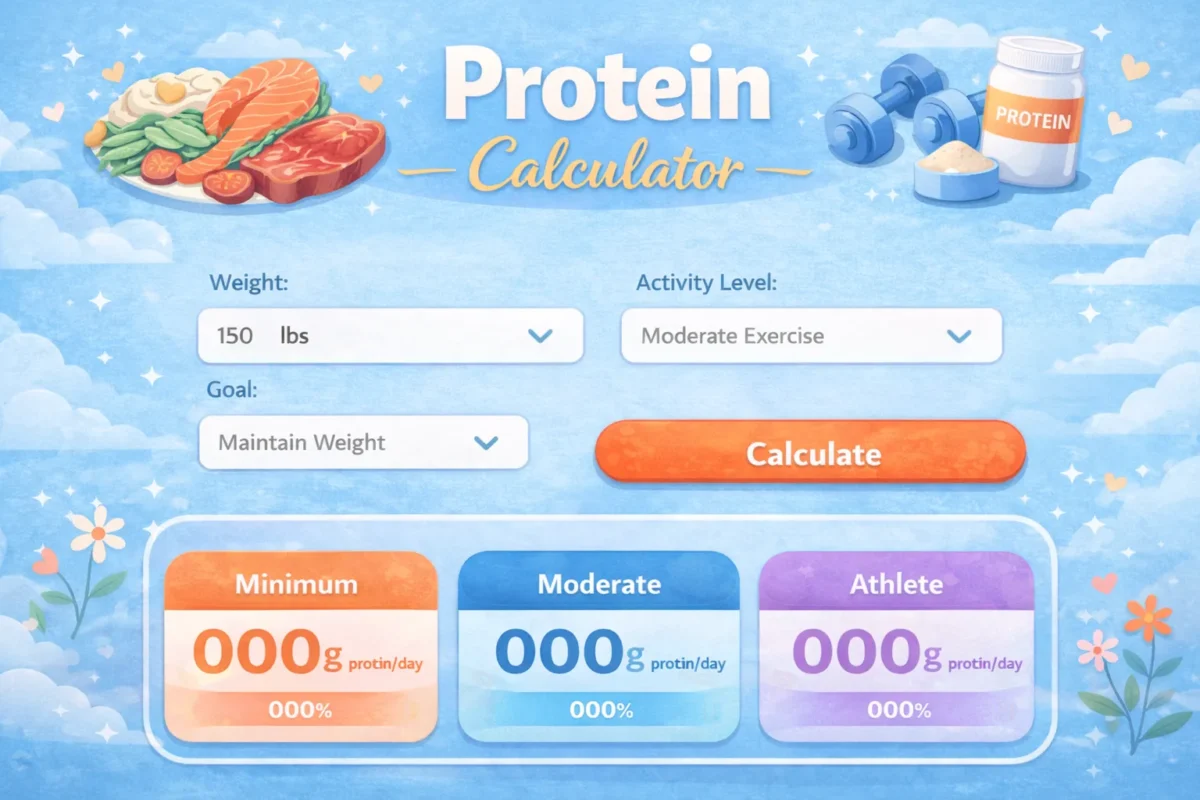
Protein Calculator
Calculate your optimal daily protein intake for muscle gain, weight loss, and overall health. Based on the latest scientific research and clinical guidelines.
Quick Summary
Most adults need 0.8 grams of protein per kilogram of body weight to prevent deficiency. However, optimal intake for muscle building, fat loss, and healthy aging ranges from 1.2 to 2.2 grams per kilogram. This calculator helps you determine your personalized protein needs based on your goals, age, and activity level.
Calculate Your Protein Needs
Enter your details to calculate personalized protein recommendations.
Calculating your optimal protein intake…
Your Protein Results
Complete the form to see your personalized protein recommendations
Your results will include:
- RDA vs optimal protein comparison
- Meal distribution recommendations
- Protein timing suggestions
- Complete protein cheat sheet
Protein Cheat Sheet
Quick reference guide to protein content in common foods. All values are approximate per 100g serving unless noted.
Animal Proteins
- Chicken Breast 31g
- Turkey Breast 29g
- Lean Beef (95/5) 26g
- Pork Tenderloin 26g
- Salmon 20g
- Tuna (canned in water) 23g
- Eggs (2 large) 12g
- Greek Yogurt (non-fat) 10g
Dairy & Plant Proteins
- Cottage Cheese (low-fat) 11g
- Mozzarella Cheese 22g
- Milk (2%) 3.3g
- Lentils (cooked) 9g
- Chickpeas (cooked) 8.9g
- Black Beans (cooked) 8.9g
- Tofu (firm) 15g
- Tempeh 19g
Protein Powders
- Whey Protein Isolate 25g/scoop
- Casein Protein 24g/scoop
- Plant Protein Blend 20g/scoop
- Collagen Peptides 18g/scoop
- Egg White Protein 24g/scoop
Nuts & Seeds
- Peanuts 26g
- Almonds 21g
- Pumpkin Seeds 30g
- Chia Seeds 17g
- Hemp Seeds 32g
- Peanut Butter 25g
Pro Tip
Combine plant proteins (like rice + beans or hummus + whole grain bread) to create complete proteins with all essential amino acids.
The Science: RDA vs. Optimal Intake
Understanding the difference between minimum requirements and optimal intake for health and performance.
RDA (Recommended Dietary Allowance)
The RDA for protein is 0.8 grams per kilogram of body weight per day. This represents the minimum amount needed to prevent deficiency in 97.5% of the population.
- Prevents protein deficiency
- Maintains basic bodily functions
- May not support muscle maintenance during aging
- Insufficient for athletes or active individuals
- May not optimize body composition
Limitation: The RDA was established in 1943 and hasn’t been significantly updated despite decades of new research showing benefits of higher protein intake.
Optimal Protein Intake
Optimal intake ranges from 1.2 to 2.2 grams per kilogram depending on goals, age, and activity level. Based on 100+ peer-reviewed studies.
- Preserves muscle during weight loss
- Supports muscle growth and repair
- Enhances satiety and metabolic rate
- Supports healthy aging (prevents sarcopenia)
- Improves bone density
- Enhances recovery from exercise
Research-Backed Ranges
• Sedentary adults: 1.0-1.2 g/kg
• Endurance athletes: 1.2-1.6 g/kg
• Strength athletes: 1.6-2.2 g/kg
• Older adults (65+): 1.2-2.0 g/kg
Key Research Findings
Journal of Nutrition (2015): Protein intake above RDA (1.2 g/kg) preserves lean mass during calorie restriction.
American Journal of Clinical Nutrition (2017): Older adults consuming 1.5 g/kg protein had 40% lower risk of frailty.
Journal of the International Society of Sports Nutrition (2018): Resistance-trained individuals benefit from 1.6-2.2 g/kg protein for muscle gains.
Frequently Asked Questions (FAQ) Protein Calculator
Q: Can I eat too much protein?
A: For healthy individuals, intakes up to 2.2g per kg are widely considered safe. The Mayo Clinic notes that while extremely high protein intake is generally safe for those with healthy kidneys, it may be harmful for people with pre-existing kidney disease. (Protein Calculator) Protein for muscle gain
Q: Is plant protein as effective as animal protein?
A: Animal proteins are “complete,” meaning they contain all essential amino acids (EAAs). However, as UCLA Health highlights, you can meet all your needs on a plant-based diet by “pairing” sources (like beans and rice) or choosing complete plant options like soy, quinoa, and buckwheat. (Protein Calculator)Protein for muscle gain
Q: How much protein can my body absorb in one meal?
A: While your body can absorb almost all the protein you eat, there is a limit to how much it can use for muscle building at once. Research suggests a “muscle-full” ceiling of 0.4–0.55g per kg per meal (roughly 25–40g for most people). Distributing protein evenly across 3–5 meals is more effective than one large “protein dump” at dinner. (Protein Calculator)
Q: Does protein help with weight loss?
A: Yes. Protein has the highest Thermic Effect of Food (TEF), meaning your body burns more calories digesting it than it does for fats or carbs. Additionally, the CDC recognizes that protein increases satiety (fullness), which helps prevent overeating. (Protein Calculator)