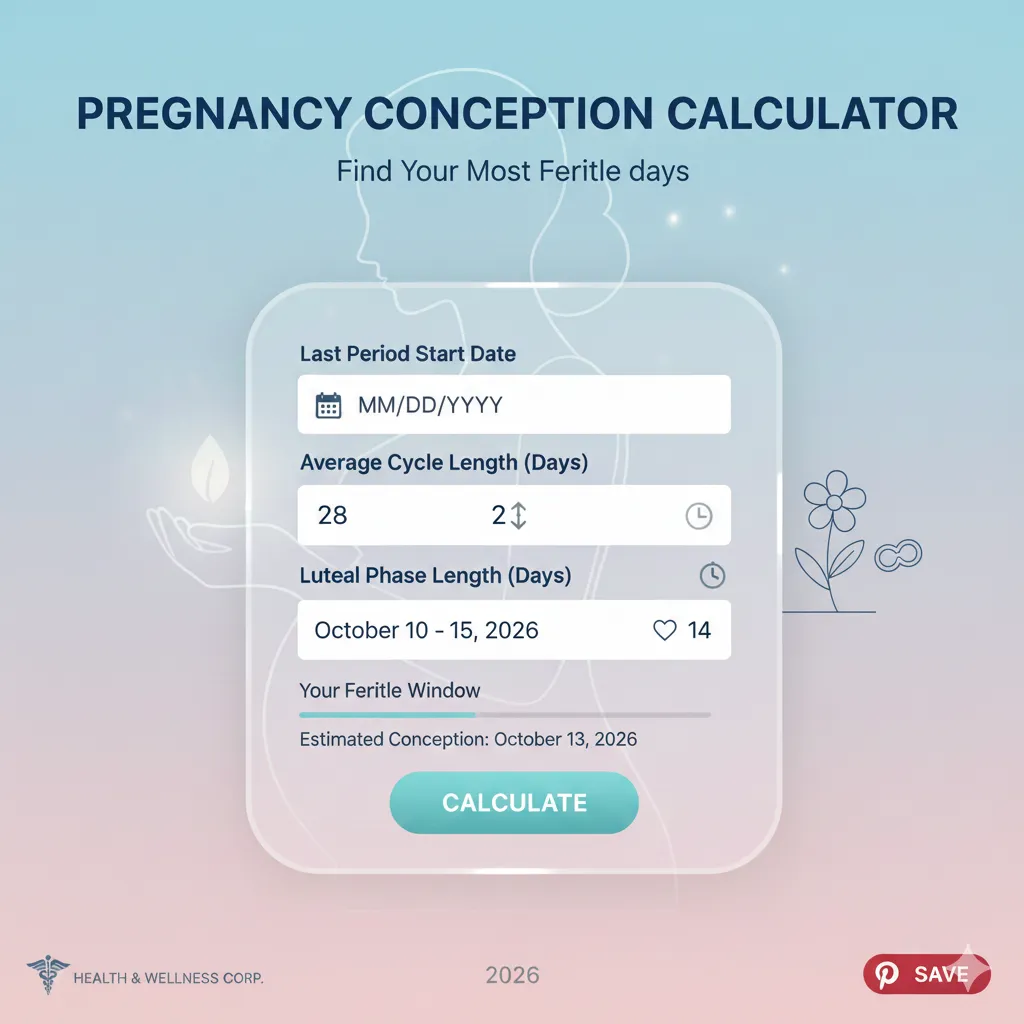
Pregnancy Conception Calculator
Calculate conception date, due date, and key pregnancy milestones based on LMP, ovulation, or known conception date
Calculate from Last Menstrual Period (LMP)
How it works: Pregnancy is calculated from the first day of your last period, not the date of conception. Most women ovulate about 14 days before their next period.
Calculate from Conception/Ovulation Date
Note: Conception usually occurs within 24 hours of ovulation. If you know your ovulation date, this method provides a more accurate due date.
Calculate from Ultrasound Measurements
Ultrasound dating: Early ultrasound (before 20 weeks) is the most accurate method for determining due date, especially if you have irregular cycles.
Your Pregnancy Results
Key Pregnancy Milestones
Heartbeat Begins
Baby’s heart starts beating, detectable by ultrasound around week 6.
First Trimester Ends
Risk of miscarriage decreases significantly. Nausea usually subsides.
Anatomy Scan
Detailed ultrasound to check baby’s development. Often when gender can be determined.
Third Trimester Begins
Baby’s chances of survival if born prematurely increase significantly.
Pregnancy Calendar
Select a calculation method and click “Calculate Pregnancy Dates” to see your personalized pregnancy calendar.
Conception & Fertility Window
Your Fertility Window
Most fertile days: January 13 to January 17, 2026
Ovulation date: January 15, 2026
Next period due: January 29, 2026
Conception Probability
Important Information
- Only about 5% of babies are born on their exact due date.
- Pregnancy is considered full-term between 37 and 42 weeks.
- If you have irregular cycles, ultrasound dating is more accurate.
- Conception typically occurs 11-21 days after the first day of your last period.
- Always confirm your due date with your healthcare provider.
Frequently Asked Questions (FAQ) Pregnancy Conception Calculator
Q: Is conception date the same as the date of intercourse?
A: Not necessarily. Sperm can live inside the female reproductive tract for up to 5 days. This means you could have intercourse on a Monday but not actually conceive until Thursday or Friday. The American Pregnancy Association (Pregnancy Conception Calculator) notes that the “conception window” includes the day of ovulation and the 24 hours following it.
Q: How accurate is a conception calculator?
A: It is an estimate. Unless you used IVF or tracked ovulation with daily LH strips, it is difficult to pinpoint the exact hour. However, the Cleveland Clinic states that most healthy women conceive within a 12-24 hour window after the egg is released.
Q: Why does my doctor use LMP instead of conception?
A: Most women do not know their exact ovulation date, but almost all remember the first day of their last period. To keep dating consistent worldwide, the ACOG guidelines use a 280-day (40-week) calendar starting from the LMP, even though the baby’s actual age (gestational age) is about 2 weeks less.
Q: Can an ultrasound change my conception date?
A: Yes. An early ultrasound (6–12 weeks) measures the Crown-Rump Length (CRL). If the baby is larger or smaller than expected based on your LMP, the doctor will “redate” your pregnancy. According to the NIH PMC research, first-trimester ultrasounds are the most reliable way to confirm the timing of conception. (Pregnancy Conception Calculator)