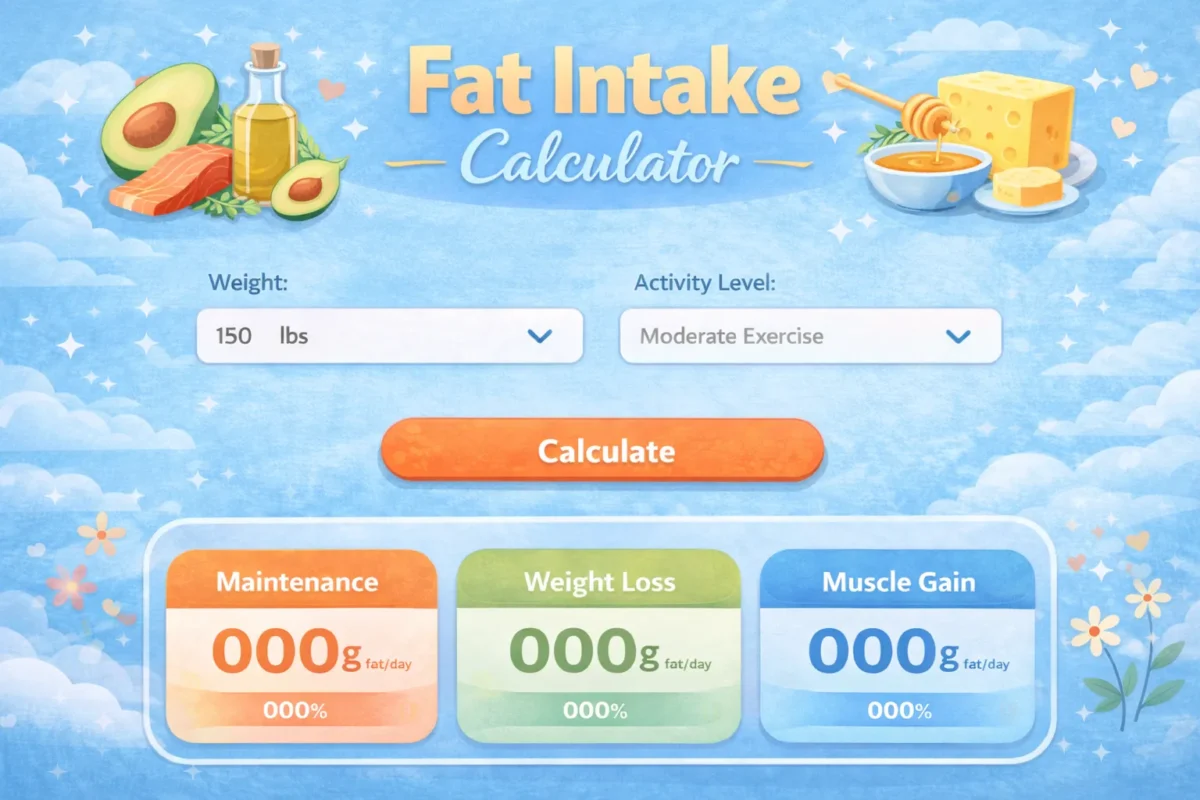
Fat Intake Calculator 2026
Debunking low-fat myths with science-based guidance on essential fatty acids, hormonal health, and optimal fat consumption
Calculate Your Optimal Fat Intake
Based on Acceptable Macronutrient Distribution Range (AMDR) recommendations from the National Academy of Sciences
Why Your Body Needs Fat
Healthy Fats
Monounsaturated & Polyunsaturated (Omega-3 & Omega-6)
Essential Fatty Acids
Must be obtained from diet (ALA, LA)
Avoid Trans Fats
Industrial trans fats increase disease risk
Fat’s Vital Roles in Your Body
- Hormone Production: Fat is essential for creating sex hormones (estrogen, testosterone) and stress hormones.
- Vitamin Absorption: Fat-soluble vitamins (A, D, E, K) require dietary fat for proper absorption.
- Cell Structure: Every cell membrane is composed of phospholipids, requiring adequate fat intake.
- Brain Health: Your brain is nearly 60% fat, requiring omega-3s for optimal function.
- Energy Reserve: Fat provides concentrated energy (9 calories/gram) for sustained activity.
How This Calculator Helps You
This tool provides personalized recommendations based on the latest nutrition science, moving beyond outdated “low-fat” advice to focus on:
- Personalized Ranges: Calculations based on your unique metrics and goals
- Hormonal Health: Ensuring sufficient fat for endocrine function
- Nutrient Absorption: Optimizing fat intake for vitamin utilization
- Risk Reduction: Guidance to minimize trans fats while emphasizing essential fatty acids
Debunking Low-Fat Myths
- Myth: All fat makes you fat. Truth: Healthy fats in proper amounts support metabolism and satiety.
- Myth: Low-fat diets are healthier. Truth: Very low-fat diets can harm hormonal health and nutrient absorption.
- Myth: Saturated fat is always bad. Truth: Some saturated fats (like MCTs) have health benefits when consumed in moderation.
- Myth: Cholesterol in food directly raises blood cholesterol. Truth: Dietary cholesterol has minimal impact on blood cholesterol for most people.
Healthy Fat Sources
Focus on these nutrient-dense sources of healthy fats for optimal health:
Omega-3 Rich Sources
- Fatty fish (salmon, mackerel, sardines)
- Flaxseeds and chia seeds
- Walnuts
- Algal oil supplements
Benefit: Anti-inflammatory, supports brain health
Omega-6 Sources (in balance)
- Sunflower seeds
- Pumpkin seeds
- Pine nuts
- Hemp seeds
Goal: Maintain 4:1 or lower Omega-6:Omega-3 ratio
Monounsaturated Fats
- Avocados
- Olive oil
- Almonds and almond butter
- Cashews
Benefit: Heart health, stable energy
Healthy Saturated Sources
- Coconut oil (MCTs)
- Grass-fed butter/ghee
- Full-fat dairy (if tolerated)
- Dark chocolate (>70%)
Note: Consume in moderation as part of balanced diet
Important Disclaimer
This calculator provides general nutritional guidance based on Acceptable Macronutrient Distribution Ranges (AMDR) from the National Academy of Sciences. Individual needs may vary based on health conditions, medications, and specific metabolic factors. Always consult with a healthcare provider or registered dietitian for personalized medical advice, especially if you have existing health conditions.
Frequently Asked Questions (FAQ)
Q: Can I eat too little fat?
A: Yes. Extremely low-fat diets (below 15% of calories) can disrupt hormone production, particularly testosterone and estrogen, and may lead to dry skin and vitamin deficiencies. As noted by Harvard Health, healthy fats are essential for brain function and cell growth.
Q: Does eating fat make you fat?
A: No. Weight gain is a result of a consistent caloric surplus. However, fat is calorie-dense, containing 9 calories per gram (compared to 4 calories for protein and carbs). The Mayo Clinic emphasizes that choosing “good” fats like avocados, nuts, and olive oil can actually promote satiety and help with weight management.
Q: What is the best fat ratio for the Keto diet?
A: For those following a Ketogenic Diet, fat intake usually jumps to 70–75% of daily calories. This shifts the body into “ketosis,” where it burns fat for fuel instead of glucose. Research hosted by the National Institutes of Health (NIH) suggests this can be effective for weight loss, but should be monitored for cardiovascular impact.
Q: How much Omega-3 do I need?
A: Omega-3s are “essential,” meaning the body cannot make them. The American Heart Association (AHA) recommends eating fatty fish (like salmon or mackerel) at least twice a week to meet these requirements and protect against heart disease.
More Health tools Fat Intake Calculator
Daily Fat Requirements, Healthy Fat Ratio, Keto Fat Calculator, Grams of Fat for Hormones, Fat Intake Calculator