BMI Calculator
Calculate Your Body Mass Index | Assess Your Weight Category and Health Risks
Calculate Your BMI
Your BMI Results
Health Risk Assessment
Your weight is within the healthy range. Maintain your current lifestyle for optimal health.
Healthy Weight Range for Your Height
Based on BMI 18.5 – 24.9
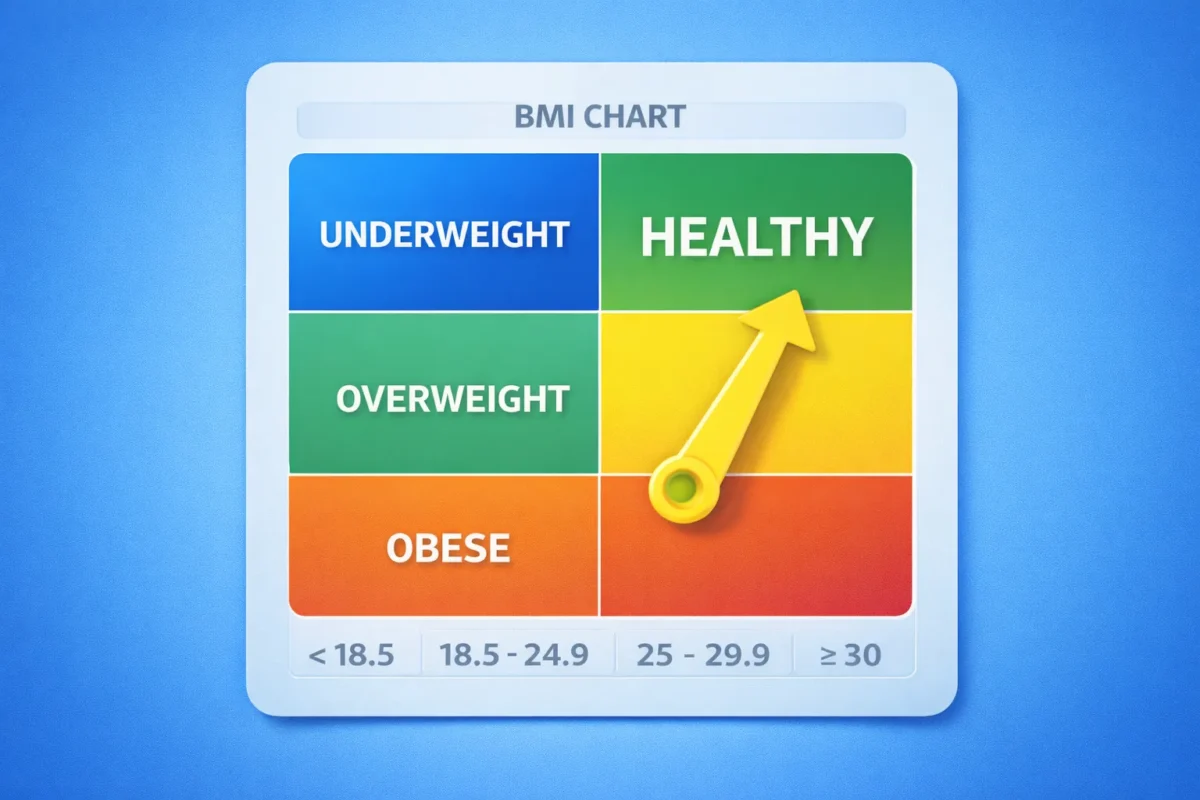
BMI Categories
Understanding Body Mass Index (BMI)
Body Mass Index (BMI) is a simple calculation using a person’s height and weight. The formula is:
BMI Formula
Metric: BMI = weight (kg) ÷ height² (m²)
Imperial: BMI = [weight (lbs) ÷ height² (in²)] × 703
Example: For someone 1.7m tall weighing 70kg: 70 ÷ (1.7 × 1.7) = 24.2
BMI provides a reliable indicator of body fatness for most people and is used to screen for weight categories that may lead to health problems.
BMI Categories and Health Risks
| Category | BMI Range | Health Risk |
|---|---|---|
| Underweight | < 18.5 | Increased risk of nutritional deficiencies, osteoporosis |
| Normal Weight | 18.5 – 24.9 | Lowest risk of weight-related health problems |
| Overweight | 25 – 29.9 | Increased risk of type 2 diabetes, hypertension |
| Obese Class I | 30 – 34.9 | Moderately increased risk of cardiovascular disease |
| Obese Class II | 35 – 39.9 | Severely increased health risks |
| Obese Class III | 40+ | Extremely high risk of serious health conditions |
Age Considerations
BMI interpretation may vary by age. Older adults (65+) may have slightly higher healthy ranges due to age-related muscle loss.
BMI Limitations
Muscle Mass
BMI doesn’t distinguish between muscle and fat. Athletes with high muscle mass may have high BMI but low body fat.
Body Composition
BMI doesn’t account for fat distribution. Abdominal fat carries higher health risks than fat elsewhere.
Age and Gender
BMI ranges may need adjustment for different age groups and genders.
Ethnic Differences
Some ethnic groups may have different healthy BMI ranges.
When BMI May Not Be Accurate
- Professional athletes or bodybuilders
- Pregnant or breastfeeding women
- Children and teenagers (use pediatric BMI charts)
- Adults over 65 years
- People with physical disabilities
Maintaining a Healthy BMI
Balanced Nutrition
Focus on whole foods: fruits, vegetables, lean proteins, whole grains, and healthy fats. Avoid processed foods and sugary drinks.
Regular Exercise
Aim for at least 150 minutes of moderate exercise or 75 minutes of vigorous exercise weekly, plus strength training twice a week.
Monitor Progress
Check your BMI regularly (monthly), but also track measurements, energy levels, and how clothes fit.
Get Enough Sleep
Aim for 7-9 hours of quality sleep per night. Poor sleep affects hormones that regulate appetite and metabolism.
Manage Stress
Chronic stress can lead to weight gain through hormonal changes and emotional eating.
Stay Hydrated
Drink adequate water throughout the day. Sometimes thirst is mistaken for hunger.
Important Medical Disclaimer
This BMI calculator is for informational purposes only. It is not a substitute for professional medical advice, diagnosis, or treatment. Always seek the advice of your physician or other qualified health provider with any questions you may have regarding a medical condition.
BMI is a screening tool, not a diagnostic tool. For a comprehensive health assessment, consult with a healthcare professional who can consider your individual circumstances, medical history, and other health indicators.
Frequently Asked Question
What is BMI?
BMI (Body Mass Index) is a screening tool that estimates whether your weight is healthy for your height.
Is BMI accurate for everyone?
BMI does not directly measure body fat and may not be accurate for athletes, pregnant women, elderly adults, or children.
Is this BMI calculator reliable?
This calculator provides an estimate and should not replace professional medical advice.